Hybrid hydrogen direct and plasma reduction of iron ore
WEBINAR FOR HILT CRC PARTNERS
For decarbonised steel production, the hydrogen direct reduction (HDR) pathway is most technologically mature, whether coupled with an electric arc furnace (EAF) or potentially with a melter and basic oxygen furnace (BOF).
Hydrogen plasma reduction (HPR) offers the potential overcome concerns about these pathways, particularly for Pilbara ores, by potentially offering more efficient and effective use of hydrogen, at the cost of added electricity.
HILT CRC Project RP1.010 Hybrid hydrogen direct and plasma reduction of iron ore aimed to establish whether hybridised HDR-HPR offers a technological and economical feasible pathway to large-scale green steel production.
Join us on 5 March to hear about the project results.
Speakers
- Adrien Guiraud, Minerals Processing Lead, CSIRO, and Minerals Processing Lead, HILT CRC – Webinar chair
- Dr Alireza Rahbari, School of Engineering, The Australian National University and project leader
- Professor M Akbar Rhamdhani, Director Fluid and Process Dynamics (FPD) Group, School of Engineering, Swinburne University of Technology
- Dr Reiza Mukhlis, School of Engineering, Swinburne University of Technology
- Chris Cooper, The Australian National University
- Bima Satritama, The Australian National University
- Q&A
NOTE: This webinar is exclusive to employees of HILT CRC Partner organisations.
SPEAKERS
Dr Alireza Rahbari, School of Engineering, Australian National University
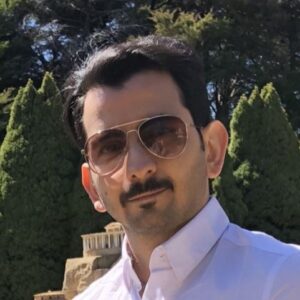
Dr Alireza Rahbari is a Senior Research Fellow in the Zero Carbon Energy for the Asia Pacific Grand Challenge program at ANU. His research focuses on renewable energy, system-level modelling, dynamic system-level simulation, technoeconomic assessment, porous media, heat transfer enhancement techniques, phase change thermal storage, and combustion of dust particles.
Alireza’s current research interests include solar fuel production via supercritical water gasification of algae biomass; solar thermal beneficiation, sintering and pelletisation of iron ore; hydrogen-based steelmaking; and advanced thermal solutions.
Alireza obtained his first PhD in Mechanical Engineering from Iran University of Science and Technology in 2011, and second PhD in Engineering from ANU in 2019. He completed his MSc in Mechanical Engineering in 2007 at Sharif University of Technology, Iran, and his BSc in Mechanical Engineering in 2005 at the same institution. He has also worked as an Assistant Professor at Shahid Rajaee Teacher Training University, Iran, and Islamic Azad University, Iran.
M Akbar Rhamdhani, Professor of Sustainable Metallurgy, School of Engineering, Swinburne University of Technology
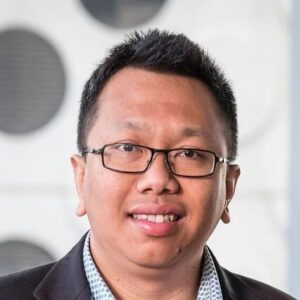
Professor Muhammad Akbar Rhamdhani is currently the Director of Fluid and Process Dynamics (FPD) Group; and Program Leader of Net Zero Carbon Materials and Processes (Manufacturing Future Research Platform) at Swinburne. He is also leading research at the university on Energy Transition Metals. He is currently the Co Editor-in-Chief of the Journal of Sustainable Metallurgy, TMS Springer Nature, USA.
A Professor in Extractive Metallurgy and Metals Recycling, Akbar obtained his PhD from McMaster University, Canada, in Materials Science and Engineering. Before joining Swinburne, he was a teaching-research academic at Institute of Technology Bandung (ITB) and the University of Queensland. Akbar was also a Visiting Professor at Katholieke Universiteit Leuven Belgium and Visiting Scientist at CSIRO.
Akbar’s research focuses on advanced metal/material refining and impurities removal; development of new processes for metal production; thermodynamics and kinetics of high-temperature metal and chemical processes; and low-carbon metal processes. His current interests include:
- recycling and recovery of metals from urban resources (e-waste, end-of-life alkaline and lithium ion batteries, solar panel, permanent magnet)
- decarbonisation and hydrogenation of metallurgical processes
- pyrometallurgical processes of rare earth element minerals
- solar metallurgy (the use of concentrated solar thermal energy for minerals and metals processing)
- astro-metallurgy (extraterrestrial minerals and metals processing, such as metals extraction on Mars and the moon).
Adrien Guiraud, Minerals Processing Lead, CSIRO, and Minerals Processing Lead, HILT CRC – Webinar chair
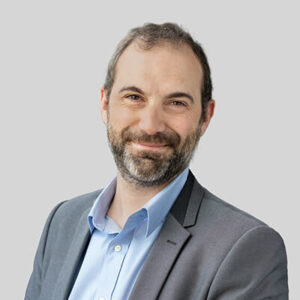
Adrien Guiraud is a process engineer with experience in minerals processing, metal production and decarbonisation of heavy industries. He specialises in translating research into practical outcomes for industry, by leading networks of multidisciplinary teams from world-class research and technology providers to deliver process optimisation and innovative technology development projects, with a focus on safety, productivity improvement, energy savings, and reducing industrial wastes and emissions across the value chain.
Adrien’s expertise covers a broad range of projects across multiple commodities, including: dry granulation and heat recovery from metallurgical slags; production and use of metallurgical-grade biochar in ironmaking; mass and energy balance modelling of green steel processing routes; microwave processing of copper ores (including ore sorting and pre-comminution); and novel energy efficiency aluminium reduction cell technologies (including sidewall heat recovery and high amperage/low energy designs).
Dr Reiza Z Mukhlis, Lecturer, School of Engineering, Swinburne University of Technology
Dr Reiza Z Mukhlis joined Swinburne as a teaching-research academic after obtaining his PhD in Materials Science and Engineering from the University. He previously completed his Masters studies (M.Sc. and M.Eng) at Technische Universitaet Hamburg Harburg-Germany and Aalborg Universiteit-Denmark in Materials Science and Mechanical Engineering Department, respectively. He obtained his Bachelors of Engineering (Hons.) in Materials Engineering from Institute of Technology Bandung in his homecountry, Indonesia.
Before joining Swinburne, Reiza conducted research in several research institutions including CSIRO Australia and Helmholtz-Zentrum Research Centre in Germany. At Swinburne, Reiza is one of the core researchers within Fluid Process and Dynamics Research (FPD) Group, Net Zero Carbon Materials and Processes Program, and Energy Transition Metal Flagship.
Reiza has worked collaboratively with CSIRO for more than a decade on various projects, including critical and strategic materials recovery and rare-earth metals extraction. He has also worked on industrial projects with local industries, e.g. Envirostreams Pty Ltd, Lithium Australia, and Upala Pty Ltd on materials recycling. He collaborates with the steel industry through HILT CRC, working to decarbonise technologies that can be commercialised and lead to net-zero production.
Reiza’s research focuses on thermodynamics and kinetics of high-temperature metal and chemical processes, critical minerals extraction, metals/materials recovery from alternatives and urban ores, and decarbonisation of metals/materials processes. His current research projects include ‘Recycling and recovery of valuable materials from alkaline and lithium batteries’; Recycling and oxidation behaviour of rare-earth elements in end-of-life magnet’; ‘Application of solar thermal energy for materials recycling’; ‘Extraction of silicon from rice hulls’; and ‘Decarbonisation and hydrogenation of steel, silicon, and lithium productions’.
Christopher Cooper, Australian National University / HILT CRC

Chris Cooper is a HILT-supported PhD student at the Australian National University, currently researching hydrogen plasma smelting and hydrogen direct reduction for low emission iron making. The aim of the work is to combine experimental research and numerical modelling to evaluate the technical and economic feasibility of several iron making pathways. One of the key objectives it to evaluate their performance when using Australian iron ore, such as ore from the Pilbara region in Western Australia.
Chris completed a Bachelor of Engineering Honours at the University of Sydney in 2020, for which he received the University Medal. He is passionate about engineering and finding technology breakthroughs to help mitigate climate change.
Chris’s PhD project is ‘Project Computational fluid dynamics simulation of hydrogen plasma reduction ironmaking’.
Bima Satritama, CSIRO/Swinburne University of Technology

Bima Satritama is a PhD student driven by curiosity about the world of metallurgy and its potential to shape a brighter future. He gained his master’s at Institut Teknologi Bandung, Indonesia, on the utilisation of hydrogen gas for nickel pig iron production, one of the fastest-growing commodities in Indonesia. Through his specialisation in pyrometallurgy, he is part of a Victorian Hydrogen Hub (VH2) project, where he is working towards the implementation of a hydrogen economy.