HILT CRC Research Showcase: Program 2 – Cross-Cutting Technologies
WEBINAR FOR HILT CRC PARTNERS
HILT CRC’s Research Showcases offer a chance to update on progress and achievements for selected projects mid-way between our annual conferences.
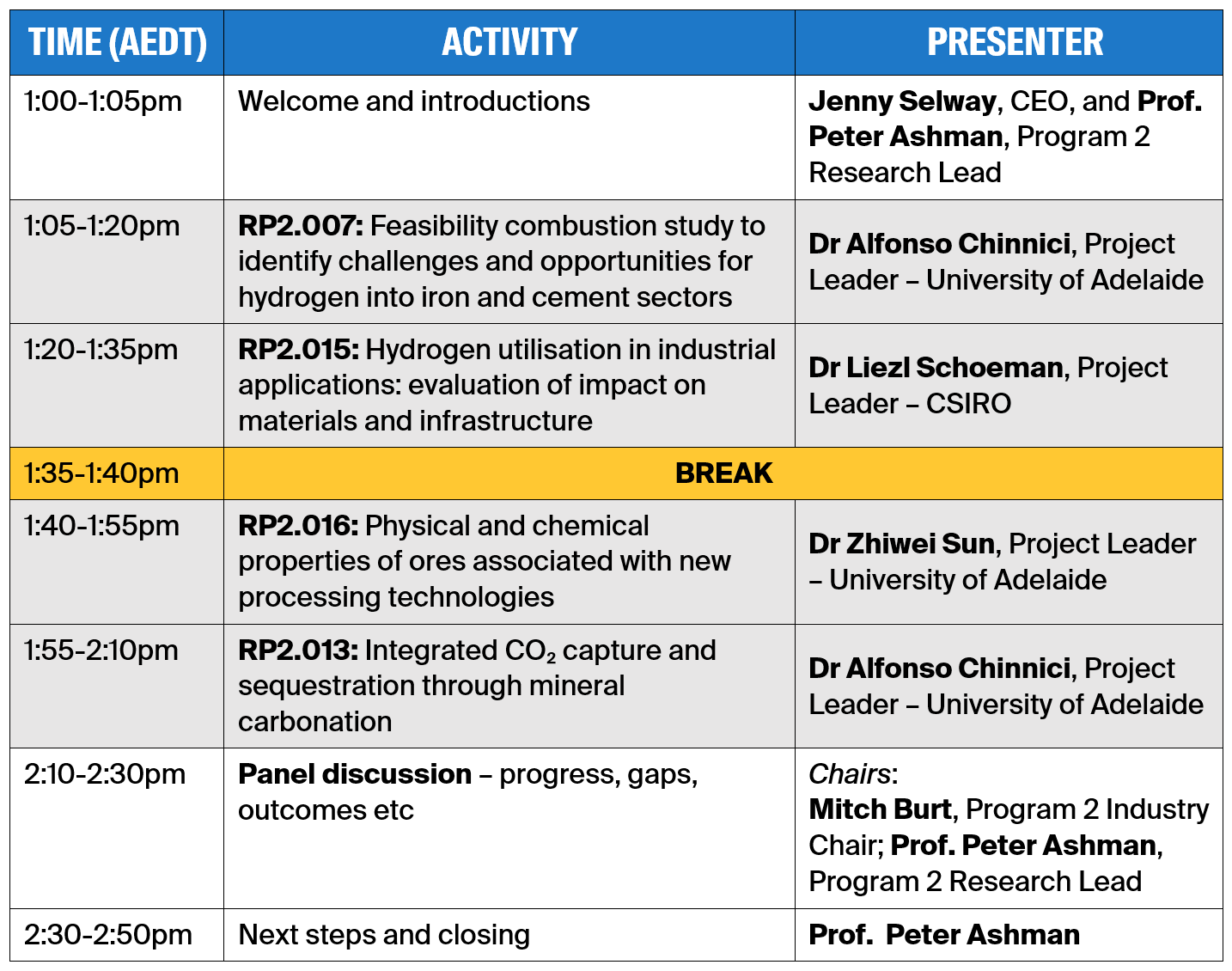
Join CEO Jenny Selway and Program 2 Research Lead Prof. Peter Ashman (University of Adelaide) to hear about how our research to de-risk and accelerate the decarbonisation of heavy industry is going and where it’s heading.
Program 2 speakers and projects
- Dr Alfonso Chinnici, University of Adelaide
- Dr Liezl Schoeman, CSIRO
- Dr Zhiwei Sun, University of Adelaide
The webinar will conclude with a panel discussion led by Prof. Ashman with Program 2 Industry Chair Mitch Burt (South 32) and the project leaders.
NOTE: This webinar is exclusive to employees of HILT CRC Partner organisations.
AGENDA
SPEAKERS
Dr Alfonso Chinnici, Senior Lecturer, School of Electrical and Mechanical Engineering The University of Adelaide

Dr Alfonso Chinnici is a distinguished Senior Lecturer in Sustainability, Net-Zero, and Energy Innovation at the University of Adelaide and an executive member of its Centre for Energy Technology. Employing cutting-edge research methodologies and fundamental engineering principles, he drives the advancement of ground-breaking clean energy technologies, prioritising the pivotal transition towards a net zero economy. At the forefront of his pursuits are the production and application of hydrogen and alternative energy carriers, alongside initiatives targeting the decarbonisation of carbon-intensive industrial processes, energy networks, and transportation systems.
Alfonso’s expertise includes sustainable reaction engineering and heat/mass transfer, combustion science and solar thermal energy, multi-phase flows, circular economy practices, and environmentally conscious metal/mineral processing techniques. He has published some 100 publications in leading international journals, 4 patented innovations, and secured over $10 million in R&D funding. Presently, he occupies a leadership research role within HILT CRC, collaborating closely with industry leaders to drive impactful net-zero initiatives. He is a former investigator within Future Fuels CRC, and has also made significant contributions to international initiatives, notably as the manager of the Mission Innovation ARENA program on green fuels and the Global Net Zero Industries Mission, further establishing his global recognition and influence.
Beyond academia, Alfonso has lent his expertise as a high-profile consultant to esteemed organisations such as the International Energy Agency and the Government of South Australia, advising on critical aspects of hydrogen, ammonia, green metals, and critical minerals supply chains.
Dr Liezl Schoeman, Team Leader Hydrogen & Gasification Materials CSIRO
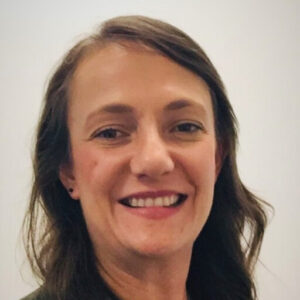
Dr Liezl Schoeman is Team Leader of the Hydrogen & Gasification Materials group within CSIRO Energy Technologies. Her team’s research includes metal membrane technology for pure hydrogen production (hydrogen purification), metal hydride compression (hydrogen storage) and hydrogen embrittlement expertise for utilisation in industrial networks.
Prior to this role in CSIRO Liezl work for the Industrial Materials and Metals Research Institute as a Senior Consulting Research Scientist leading projects to evaluate, improve and optimise industrial processes at-scale for various international clients including Anglo American, Arcelor Mittal and Toyota. She leads projects within Energy Technologies, the Hydrogen Energy Systems FSP and is involved in collaborative research within the Critical Energy Metals Mission. She is a contributing member of the Energy Science Council, Developing the R&D hydrogen strategy for CSIRO, the Engineering Community of Practise, and the Energy Culture Committee.
Liezl has supervised various levels of students and projects and currently has a postdoctoral fellow already working on a similar project within HILT CRC. She has 15 years experience in managing scientific research projects, upscaling these and doing engineering research and implementing and optimising industrial systems accordingly. She has published internationally and presented at various international conferences
Dr Zhiwei Sun, Senior Lecturer, School of Electrical and Mechanical Engineering The University of Adelaide
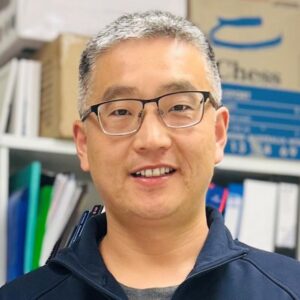
Dr Zhiwei Sun works on advanced experiments in combustion and multiphase flows like particle-laden flows, fluidised beds and bubble flows. Unique home-developed optical/laser-based techniques are used to quantify the key parameters in lamianr or turbulent flows with high spatial and temporal resolution. Dr Sun focuses on the development of unique new experimental methods.
Sun’s research interests include: advanced laser/optical diagnostic techniques development; experiments in thermo-fluids (laminar or turbulent); experiments in multi-phase flows, e.g. particles, bubbles; AI + Laser diagnostics + CFD; renewable thermal energy, hydrogen, solar thermal energy and biomass; and high-temperature processing and heavy industry decarbonisation.
Jenny Selway, CEO, HILT CRC

Jenny has over 20 years’ experience as an engineer and non-executive director, with expertise in decarbonisation and the energy transition. Jenny is currently the CEO of HILT CRC. Prior to this, she worked across the energy industry at AEMO, the Australian Energy Market Operator, where she focused on increasing renewable penetration in the Victorian transmission network, and at ExxonMobil, specialising in international joint venture and asset management. She is currently a member of the Australian Government’s Industrial Decarbonisation and Green Metals Advisory Panel and a non-executive director at Gippsland Water.
Originally graduating from the University of Adelaide with a Bachelor of Engineering (Hons) and Bachelor of Science, Jenny is also a graduate of the Australian Institute of Company Directors and a Fellow of Engineers Australia. She has completed an Executive MBA from Melbourne Business School and postgraduate studies into Climate Change Policy at the Australian National University.
Gus Nathan, Professor in Mechanical Engineering at The University of Adelaide and Research Director, HILT CRC
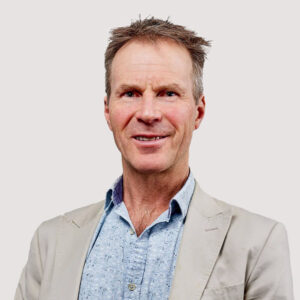
Prof. Gus Nathan is a Professor in Mechanical Engineering at the University of Adelaide, a Fellow of the Academy of Technological Sciences and Engineering, the Combustion Institute and Engineers Australia, a recipient of a Discovery Outstanding Researcher Award from the Australian Research Council and an ATSE KH Sutherland medallist. He was the bid leader for and is now the Research Director of HILT CRC. This builds on his leadership of an ARENA-funded program to develop technology with strong potential to provide energy to the Bayer alumina process with concentrated solar thermal heat in partnership with Alcoa and Hatch, together with his co-leadership of program to develop innovative hydrogen production technologies within the Future Fuels Cooperative Research Centre.
Gus has led the development of six technology platforms, three of which are in ongoing commercial use and include the flame for Sydney Olympic Relay Torch, while three are currently being upscaled to decarbonise heavy industry. Gus has published more than 300 papers in international journals, 250 in peer reviewed conferences, 50 commissioned reports and 13 patents. He is also the founding chair of the High Temperature Minerals Processing (HiTeMP) Forum and co-founder of the Hydrogen Production Technologies (HyPT) forums, both of which attract some 170 delegates from more than 13 countries, drawn equally from industry, research and government agencies. He is also a joint founder of the international ISF Workshop for the Measurement and Computation of Reacting Flows With Carbon Nanoparticles, which engages some 100 researchers from around the world and is aligned with his own speciality in optical diagnostic methods to de-risk emerging technologies in hydrogen production and heavy industrial processes.
Peter Ashman, Professor of Chemical Engineering at the The University of Adelaide, and HILT CRC Program 2 Research Leader
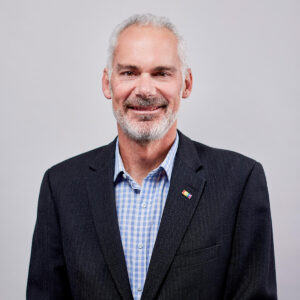
As well as leading HILT CRC’s Cross-Cutting Technologies Program, Peter is Deputy Dean (Performance and Infrastructure) of the Faculty of Engineering Computer and Mathematical Sciences at the University of Adelaide. As a senior member of the University of Adelaide’s Centre for Energy Technology, his current research interests are in the fields of biomass utilisation, bioenergy and solar thermal energy. He works on the development of new processes and technologies in the field of solar gasification. Earlier in his career, he co-led a program in the CRC for Clean Power from Lignite, focusing on the fluidised-bed gasification of Victorian and South Australian low-rank coals for the high-efficiency generation of electricity via Integrated Gasification Combined Cycle.
Mitch Burt, Practice Lead for Decarbonisation Technology South32, and Industry Chair, HILT CRC Program 2

Mitch Burt is the Practice Lead for Decarbonisation Technology at South32, where he is responsible for identifying and advancing nascent technology options that will be required to achieve net zero emissions across the company’s diverse portfolio of operations. A mechanical engineer by profession, he has spent the majority of his career in operational roles at underground coal and hard rock mines in central and western Queensland.
Prior to moving into technology development, Mitch’s experience included project management, asset management, finance and managing multi-disciplinary teams. In his current role since 2021, Mitch has identified key technology focus areas for South32, established and accelerated internal study programs, and played leading roles in collaborative partnerships including the Long Duration Energy Storage Council, the Electric Mine Consortium and HILT CRC.
Mitch holds bachelor degrees in Mechanical Engineering and Science (Mathematics), a Graduate Diploma in Energy and Carbon Studies, and a Masters in Renewable and Sustainable Energy, for which he received the Staff Prize for Academic Performance. Mitch is also Industry Chair for HILT CRC Program 2, Cross-cutting Technologies.