Advancing the viability of high-temperature thermal energy storage for industrial applications
WEBINAR FOR HILT CRC PARTNERS
Join us to hear about HILT CRC’s work on high-temperature thermal energy storage (TES) for industrial applications.
One of the key challenges for heavy industry’s adoption of TES is integration. For very high temperature processes, such as calcination in alumina refining and heat supply to hydrogen direct reduced iron (DRI) processes, it is unclear how to best integrate TES, and whether its cost advantage over other options remains once integration costs are fully considered.
HILT CRC project RP2.009 Advancing the viability of high temperature thermal energy storage for industrial applications undertook a scoping study to better understand the requirements of users of high-temperature heat within HILT CRC, and to provide these stakeholders clear, contemporary information about options for high-temperature TES integration into their processes.
Commencing recently, RP2.017 extends the project to enhance understanding of integrating TES into key heavy industry low-carbon transition processes by developing case studies, conducting technoeconomic analyses, and addressing feasibility challenges. Ultimately, it will identify a promising use-case for a pilot-scale TES demonstration.
Industry perspectives on the key challenges for adoption of TES will also be presented from an end-user perspective (South32) and two TES technology developers (1414 Degrees and Magaldi).
Webinar agenda
- Professor Peter Ashman, Leader, HILT CRC Cross-Cutting Technologies Program – Welcome
- Professor Joe Coventry, School of Engineering, The Australian National University and project leader – Project summary
- Mitch Burt, Practice Lead for Decarbonisation Technology, South32, Research Director – End-user industry reflection
- Dr Mahesh Venkataraman, Chief Technology Officer 1414 Degrees – Technology developer perspective
- Magaldi– Thermal storage technology application including fluidisation, pilot/demonstration plants and scaling up (presented by Dr Jordan Parham, HILT CRC Strategic Initiatives and Partnership Director)
- Q&A
NOTE: This webinar is exclusive to employees of HILT CRC Partner organisations.
SPEAKERS
Professor Joe Coventry, School of Engineering, Australian National University
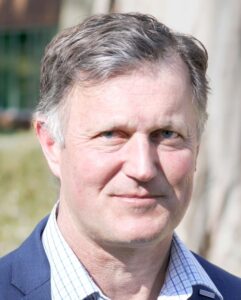
Joe Coventry is a researcher and engineer experienced in development and commercialisation of concentrating solar and energy storage technologies. Prior to this, he was the Principal Engineer at Wizard Power, and led the engineering team and development of the Big Dish CSP technology.
Joe’s expertise is in the field of concentrating solar thermal (CST) and thermal energy storage (TES). His present research aims are to advance knowledge and develop technologies with high impact on the competitiveness of CST and TES, to drive uptake and rapid decarbonisation in both power and heavy industrial sectors.
Joe holds a BE/BSc from the University of Melbourne (1997), and a PhD from the Australian National University (2004).
Mitch Burt, Practice Lead for Decarbonisation Technology, South32

Mitch Burt is the Practice Lead for Decarbonisation Technology at South32, where he is responsible for identifying and advancing nascent technology options that will be required to achieve net zero emissions across the company’s diverse portfolio of operations. A mechanical engineer by profession, he has spent the majority of his career in operational roles at underground coal and hard rock mines in central and western Queensland. Prior to moving into technology development, his experience included project management, asset management, finance and managing multi-disciplinary teams.
In his current role since 2021, Mitch has identified key technology focus areas for South32, established and accelerated internal study programs, and played leading roles in collaborative partnerships including the Long Duration Energy Storage Council, the Electric Mine Consortium and HILT CRC. Mitch holds bachelor degrees in Mechanical Engineering and Science (Mathematics), a Graduate Diploma in Energy and Carbon Studies, and a Masters in Renewable and Sustainable Energy, for which he received the Staff Prize for Academic Performance.
Mitch is also Industry Chair for HILT CRC Program 2, Cross-cutting Technologies.
Dr Mahesh Venkataraman, Chief Technology Officer, 1414 Degrees

Mahesh has more than 10 years’ experience in cutting-edge technological research in high temperature materials, thermal storage, solar thermochemistry and renewable energy integration. He leads At 1414 Degrees’ key mission to prove its SiBox™ technology for commercial use and develop the next generation of efficient silicon energy storage. He also leads the company’s engineering and R&D teams and has worked at world-renowned academic institutions including the Australian National University, University of Connecticut and Monash University, and has active collaborations with several universities and national labs in Australia and overseas.
Mahesh has a strong interest and track record in developing a wide array of renewable energy technologies including thermal energy storage, supercritical water gasification, solid-oxide fuel cells, green steel and renewable hydrogen production.
Dr Jordan Parham, Strategic Initiatives and Partnerships Director, HILT CRC

Jordan’s career has been dedicated to the research and development of energy technologies to support the transition to a low-carbon future. This has included research studies and management at the University of Adelaide and the University of Edinburgh, and as an engineer and then Chief Executive Officer of the Asia-Pacific Business Unit at FCT Combustion, a world leader in supplying combustion equipment to high-temperature industries. Most recently, he was Acting Chief Executive Officer at 1414 Degrees Ltd, an ASX listed company focused on developing thermal energy storage technology and the Aurora renewable energy project. His extensive experience includes leading teams to deliver local, national and international projects across a wide range of fields, combining his unique engineering and technical experience with strategic, leadership, business and project management skills. A particular highlight of his career includes the successful delivery of flame effects for multiple Olympic Games, some of the most watched flame effects in history.
Jordan has a strong interest and track record in developing clean thermal energy technology with a comprehensive understanding of the energy sector globally and in Australia. His qualifications include a Bachelor of Mechanical Engineering and PhD from The University of Adelaide, a Diploma in Project Management and Advanced Management Program from the University of Melbourne Business School.